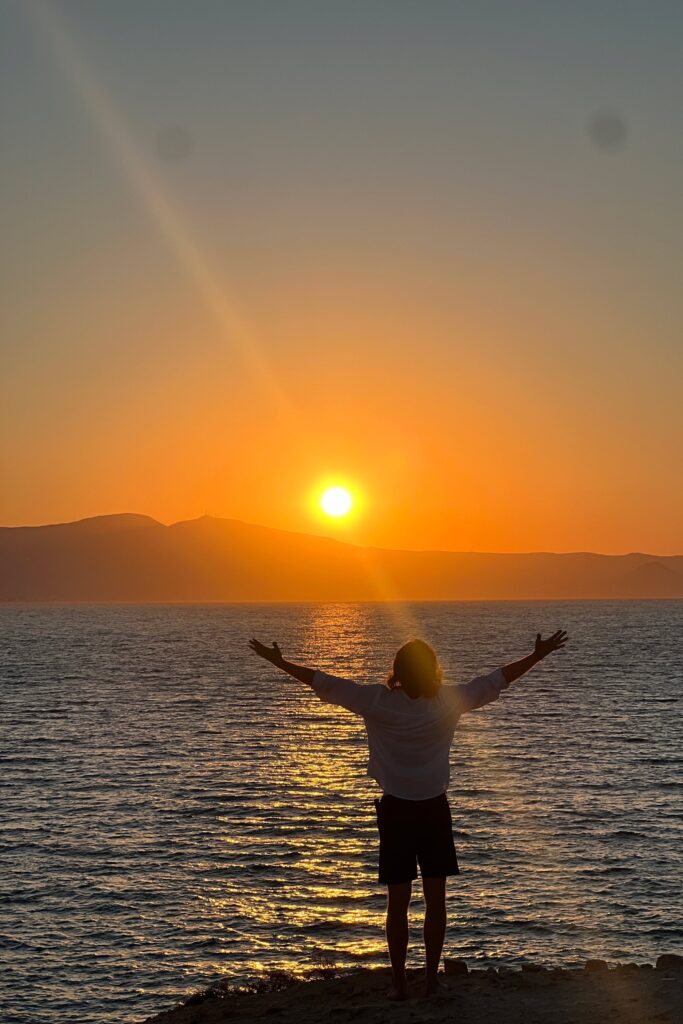
PEOPLE WHO INSPIRE
The Way Back to Yourself with Lukas Kulbis
Justina and Roberta sit down with Lukas Kulbis, Lithuanian-American breathwork coach, entrepreneur, and seeker. He shares how a single mushroom walk in the woods led him to quit his corporate job, move to Ecuador, and dedicate his life to teaching others how to breathe. This is a conversation about returning to yourself.
“I breathe all the time. Why do I need to breathe? I can do that in my sleep.”
His roommate sat him down on the couch. Put on a Wim Hof video. And Lukas, the computer science guy, the chess player, the practical thinker, rolled his eyes.
First minute: am I doing this right? Second minute: this is stupid. I’m going to stop.
And then, on the first breath hold, the moment after the inhale, when everything goes still, it was like an instant switch.
“Seeing the big picture. Recognizing that my thoughts don’t rule me. The only moment we ever have is the one that’s here and now.”
Everything shifted.
We first connected with Lukas through the Lithuanian community, a thread that, as many of you know, has a way of weaving people together across cities, continents, and chapters of life. Lukas grew up in Chicago carrying the heritage of grandparents who fled the Soviet Union and built their lives from scratch in a new country.
When we sat down with him, we had no expectations for the conversation that followed.
Lukas is a breathwork coach, a former startup founder, a hotel manager in Ecuador, and someone who left a corporate fintech job because a mushroom on a walk told him not literally, but almost, that there was another way to live.
What drew us to him was simple: he has found something real, and has a passion to share his inner light to the world around him. To give it away, and be the reminder for people to come back to what is truly theirs: the breath.
THE ROOTS
Lukas was, by all accounts, on the right path.
Computer science degree with a concentration in AI and big data. A startup with his best friend. A corporate job in financial technology waiting on the other side of graduation. He was doing what was best, or at least, according to society.
But something kept feeling off. He knew that this wasn’t it for him.
“I kept on trying to get to the next level to feel good about what I was doing. Once we build the product, once we launch, once we get some sales — then. And those things came, and they did feel good, but ultimately I was just always disconnected. Always feeling drained.”
This is a story that may feel familiar for many. Believing that once you finally attain a particular title, or see a certain number in the bank account, or finally get the job, that only then contentment and satisfaction will come. But at some point, you get the title, the money, and only then really wonder, “now what?” When we base our success on external stimuli outside of ourselves, we put our happiness in the hands of something we can not control. We give something else the power to dictate whether we feel successful or not. At some point we have to ask ourselves, what does that term of success and satisfaction really mean to you?
For Lukas, he knew there was something more for him. He knew it was time to “plant some seeds for adventure.”
So he stepped away from the startup. He took the corporate job to pay off some debts in the meantime. He explained that it was the end of COVID when he dipped his toes into the world of mushrooms listening to Paul Stamets. During this time he also started walking his dog a bit more frequently without quite knowing why. In a way, it was an innate sense of the need to become more grounded.
“It was kind of like my body itself was moving me back to nature, back to the outside. Some intuitive force pushing me toward more time outside.”
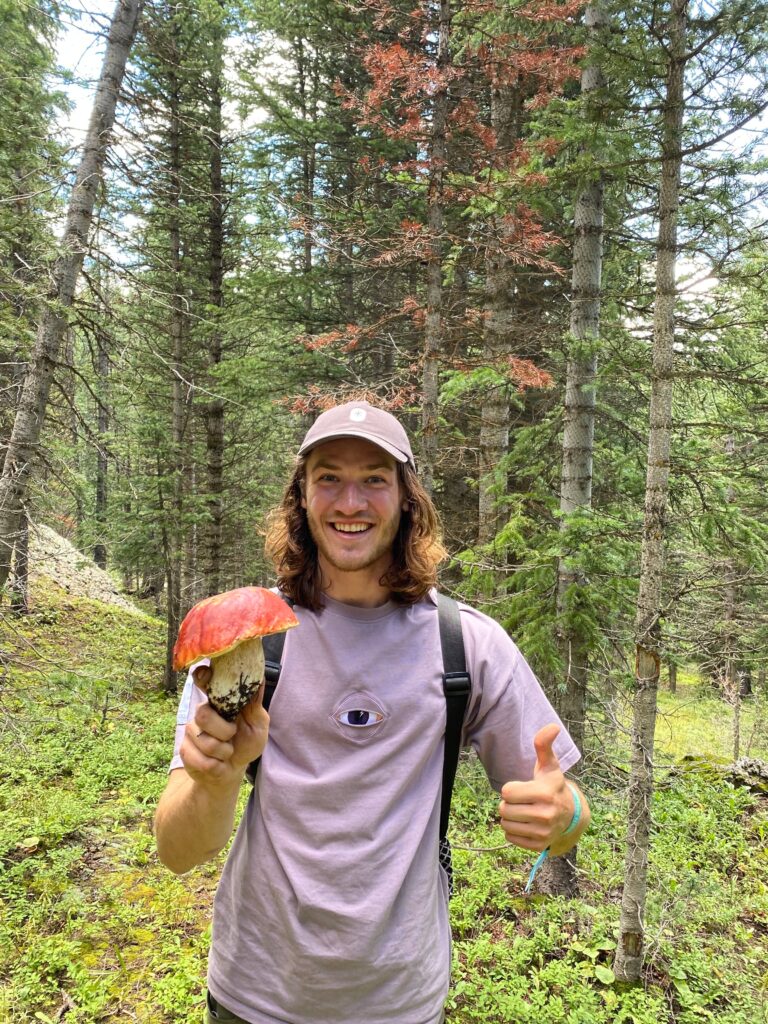
One day on one of those walks, he spotted a bright orange mushroom growing off the side of a tree. Suspecting it was poisonous because of the vibrant colors, he took a sample anyway, brought it home, identified it as chicken of the woods (one of the best “beginner’s mushrooms”), cooked it, and ate it.
“It was just such an aha moment. Wow, the earth really provides everything that we need. Air, sun, food. And I was just so disconnected from that.”
That mushroom sent him to the Telluride Mushroom Festival. And Telluride sent him on a solo ten day backpacking trip through Colorado. And when his job said he couldn’t go, he had determined that indeed, he can. He said goodbye to that career, not in anger, but in clarity.
“So then I just kind of left the nine to five, just really trusting in the path, and trusting in this call of knowing this is going to make me feel alive.”
Sometimes the body knows before the mind catches up. The long walks, the mushroom, the trailhead, none of it looked like a plan. And yet, it was exactly the path that was needed.
THE LEAP
The real fear didn’t arrive when he quit.
It arrived when he was standing at the trailhead with his backpack, watching his friend’s car pull away. Ten days alone in the wilderness. A type one diabetic, with only his own medical supplies and the wilderness for company.
“…It was kind of stepping into the unknown. And it was very much the internal of just like, what if something goes wrong?
The fear was really for my safety. The chatter in the skull of like, is this the right thing to do? Just not knowing. The uncertainty.”
He pauses when he tells us this, and then shares a phrase he returns to often:
“There’s that quote that ‘we suffer more in imagination than in reality’. The fears were just mentally orchestrated to protect. But through using the breath, I was able to just start walking. Start walking on that path.”
He explains that through breath, he was able to create space between these thoughts. Room for them to breathe as well. Recognizing that thoughts are simply just thoughts, and that they pass, like the clouds in the sky.
Not long after, his mother called with news: the family was considering investing in a small hotel on the coast of Ecuador. Did he want to go down with his sister to run it? As he planted his own seeds for an adventure that he was just beginning, an entirely new, grand adventure had presented itself almost simultaneously.
He said yes before she finished the sentence.
He arrived in Puerto López, a fishing and ecotourism town, with two phrases of Spanish: ‘¿Dónde está el baño?’ and ‘Yo quiero cerveza.’
No industry experience. No real plan. Just saying yes, and surrendering to this inner calling.
In these ways it’s almost as if the universe rewards us for the steps we take that bring us closer to our truest selves. These steps aren’t easy, and leaving safety, comfort, and stability is sometimes the scariest thing we can do. However, when you imagine your dream life, it’s these steps that allow us to get closer to those visions. It’s the leaps, moments that feel like a free fall, learning the power of trust, surrender, and belief in the life you want.
THE BREATH
2020 had arrived, and COVID was settling in. And Lukas was in a questionable place.
“I don’t know if I was clinically depressed, but I was down in the dumps. Constantly overthinking. My mind was just always on computer science, chess, math. Always rational, always running.”
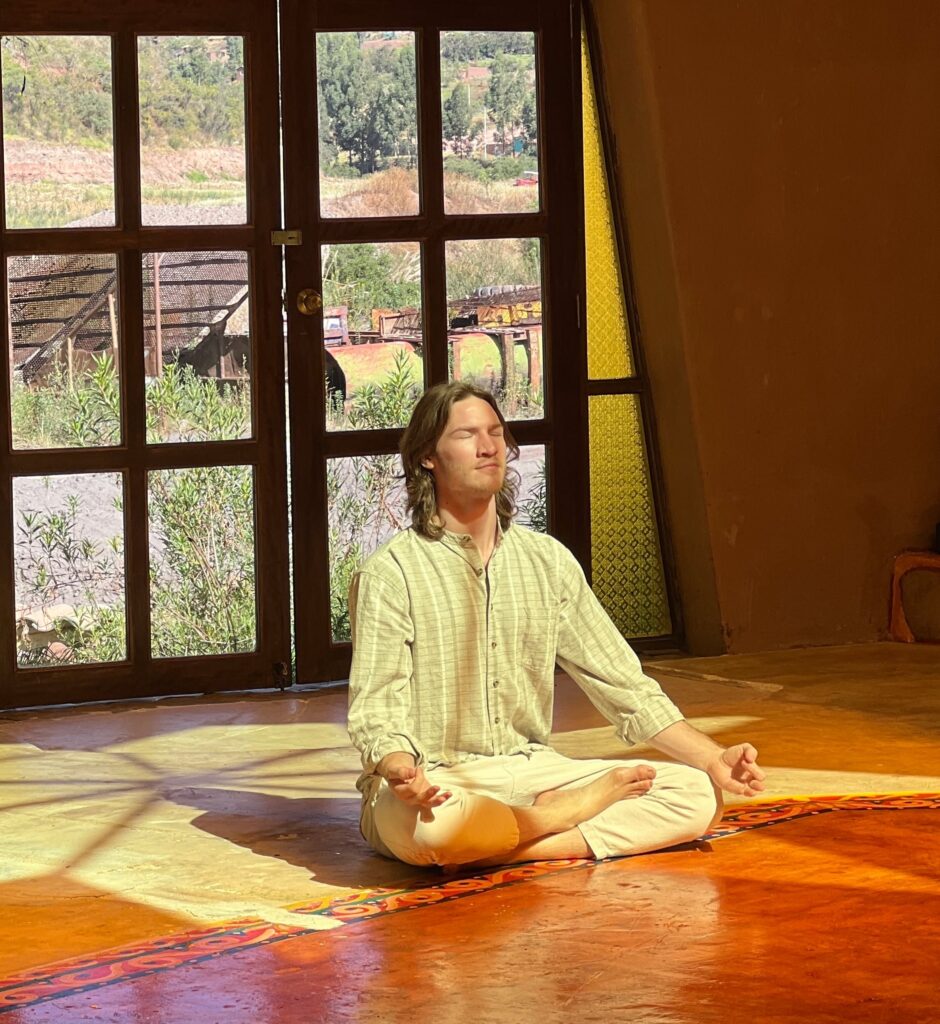
His roommate sat him down, and put on a Wim Hof guided breathwork video. His life, as we now know, had changed during these moments.
What happened in that first breath hold wasn’t exactly mystical, or at least, didn’t feel that way to Lukas at the time. After some initial uncertainty, the uncertainty had quickly turned into something that felt like returning to an old home. A natural state that had felt familiar to his body. A re-remembering of something he had always known.
“…and then with the first breath hold, the first time where after hyper oxygenating, you kind of let all the breath out, and just stay still, it was like an instant switch, where it was just like, seeing the big picture, recognizing that my thoughts don’t rule me, and it was just a moment of presence, being here and now, in which everything shifted, because I just realized, the only moment that we ever have is the one that’s here and now.”
For those of us who live inside our heads, as most of us do, this is worth sitting with.
Lukas explains the science with the same ease that he talks about spirit, layering both together seamlessly. He reminds us that you can live three months without food, three weeks without sleep, three days without water, yet only three minutes without breath. And yet it’s the one thing we never think to examine – the essential framework of being alive that we take for granted, and one we tend to overlook.
“Your breath directly connects your brainwaves, your heart rate, and your nervous system. It happens automatically, but it’s also one of the only reactions we can do intentionally. It’s like blinking, except blinking cleans your eyes. Breathing changes the whole state of how you live, sleep, work, play.”
He points to something most of us were never taught: the difference between breathing mechanics (training the respiratory system for performance) and breathwork (using the breath to intentionally shift your physical, emotional, mental, and spiritual state).
“We are embodied beings. If you can shift your body to feel a certain state, then your brain, and the way you perceive, and therefore your life, also changes.”
Most of us try to think our way into feeling better. Breathwork says: start with the body, and let the mind follow. When we give our breath our intention, we instantly become present.
THE BEGINNINGS
As far as breathing goes, it’s gone on since the beginning of time. But the awareness of breathing, although relatively recent in the Western world, has been a central teaching throughout cultures over thousands of years.
Breathwork today, he says, is where yoga was twenty five years ago in the West, undefined and quietly transforming people’s lives. But trace it back and you’ll find it in every tradition, every lineage, every corner of human history.
“Across cultures, breath and spirit are almost always connected in the same word.”
He highlights the fascinating roots in the linguistic aspects of the word: to breathe.
The Latin root spirar means breath. From it: Inspirar — to breathe in, to inspire.
Expirar — to breathe out your last breath, to expire.
Conspirar — to breathe together, to conspire.
Perspirar — to breathe through your skin, to perspire.
And then: spiritus. Spirit.
And in Lithuanian? Kvapas — breath, and also smell. Both pointing to that invisible presence that moves through the air. The language, he reminds us, holds it all together.
“In Buddhist monasteries, the first lesson is: this is how you breathe properly. You look at Christianity, God breathed life into Adam. It’s across all of them….
What is the most solid, reliable experience in your life? It’s your breathing. It’s rhythmic too, which our bodies love rhythm, right? It’s musical in a way. Basically by starting with focus, like by starting with attention, because ultimately what are we but our attention?”
Where our attention goes, energy flows.
So why are so many of us disconnected from the most innate and instinctual thing we all do?
Why is it that we need classes, and guidance, and retreats to remind us of these fundamental aspects of being? Why is it that in the West, none of our school teachers teach us to pay attention to our breath? As a society, we have turned to any and every external factor when it comes to finding peace. Liquor, drugs, work, addictions, etc. This shift is not entirely accidental. Its the product of a world that was built to produce, and to innovate – to keep us “productive.”
Characteristically, Lukas adds to this note on external versus internal regulation.
“And then there’s kind of a theory there that I have that, well, if you teach people how to breathe properly, then you give them more agency because they’re less dependent on the external, right? Because they’re able to regulate themselves, and then they’re harder to control and harder to sell to. And so essentially, it’s not really profitable to teach people how to learn how to breathe.”
PHILOSOPHY
“Between stimulus and response, there is a space, and in that space is our freedom,” Lukas relays Viktor Frankl’s words, and adds one amendment of his own. That space, he says, is the breath.
His mission statement, arrived at after years of searching:
“Empowering leaders to harmonize within, creating conscious ripples for all generations.”
He focuses his coaching on entrepreneurs and high performers, not because he believes ordinary people matter less, but because he believes leaders who make regulated, conscious decisions send ripples outward: to their teams, their communities, everyone their work touches. He also speaks about something simpler. Something anyone can do tonight, before their eyes even close.
“Place your hands on your belly. Feel your diaphragm. That’s all. Just feel the muscle that is doing the breathing. It will calm your mind, deepen your breath, and lead to more efficient sleep.”
He does not make this feel like one more thing to add to the list. He makes it feel like returning to something you forgot you have access to at every moment.
“Breathing isn’t adding another to-do to your life. It’s changing something you’re already doing. You’re already doing it. Just do it a little better.”
WHAT’S NEXT
Lukas is building something. Slowly, intentionally, the way he does most things.
A coaching practice for entrepreneurs and high performers. A free Skool community called The Breath Works. A hotel on the Ecuadorian coast, still quietly running. International Retreats (applications open for August 2026), as well as something larger, a global movement called Coherence, with the moonshot goal of synchronizing one billion people’s breaths at the same rate, on the same day, at the same moment.
“There’s science that backs this up, it doesn’t matter if you’re in New York and I’m in Quito. If we breathe with intention at the same rate, our nervous systems align. Our hearts start beating at the same pace.”
The next global sync is on the summer solstice. You don’t need anything to join, just a browser, and a willingness to breathe.
When we ask him why, he shares his heart with us.
“I truly believe, one by one, in helping people give themselves permission to live the life they want to live. Because when you’re doing what you’re called to do, and you feel good about yourself, you naturally want to give to others. You want to share. We’re social creatures. When you’re good, you want to share the love.”
TAKEAWAYS
The theme of Lukas’s life is not breathwork, exactly. It’s more of a coming home, or a sense of returning.
Return to the body. Return to the present. Return to the essence. Return to the thing that was always there, quiet and steady, waiting to be noticed.
He left the startup. Left the corporate job. Left Chicago. Followed an orange mushroom on a forest path to a life that, from the outside, might look like chaos, and from the inside, feels like finally being home.
“The breath really is the bridge,” he told us. “From where you are to where you want to be.”
Maybe that’s all any of us are looking for. Not a new technique, not a better plan, just the bridge. And the courage to step onto it.
You already know how.
Inhale. Exhale. And choose consciously.
The secret of life is right under your nose.
A big shout out to Lukas, for always showing up authentically. Something we can just feel in person and online too.
Check out his instagram @lukaskulbis and connect with him there! Thank you Lukai for sharing with us and being open to this conversation. You have sparked something within us! Onwards!
Feeling inspired or moved? Let us know on @sielaco. Want to share your story? Email us at hello@sielaco.com