PLACES THAT INSPIRE
Lessons of the East
A Travelogue of India
By Roberta Zimnickaite
A month in India
Roberta shares her personal tales of her time spent in India — from ancient Vedic philosophies to soul searching. Completing her yoga teacher training has taught her much more than she could’ve imagined. A dream to see what it’s really all about in the East…
CONTENTS
I. Prologue
II. Yogic Philosophy
III. Lessons Learned whilst Traveling
V. Perfume from the Earth: Attar
VI. My Takeaways
I. Prologue
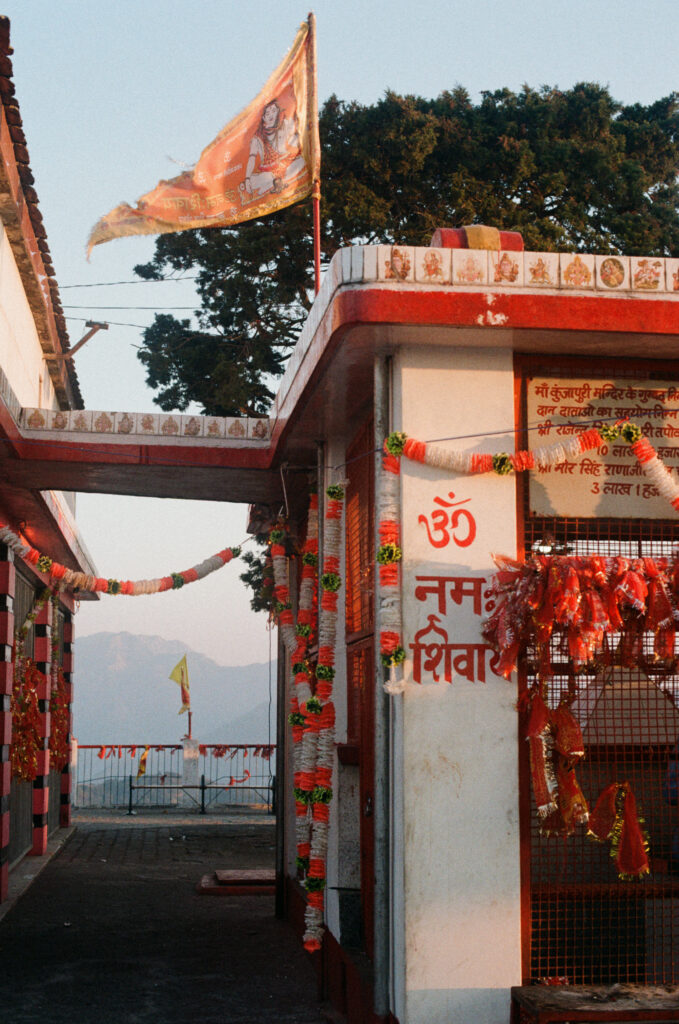
India. The 7th largest country in the world.
I remember reading someone’s account of India, and they explained how this place is a direct reflection of you.
The feelings of overwhelm, chaos, and finding where you may fit amongst it all. It challenges you, and broadens the boundaries of comfort zones imagined for yourself.
Amongst a world so different from our own.
A world so rich with culture, and so full of life, one of many calibers, layers, and levels of humanity.
India is a world of polarities: a land that accurately reflects the complexities of human nature. A world of enlightened beings in the same world of poverty. A place where karma yoga is preached yet the streets are lined with litter. A land where all worlds coexist, and where we learn the practice of stillness in the busiest of places.
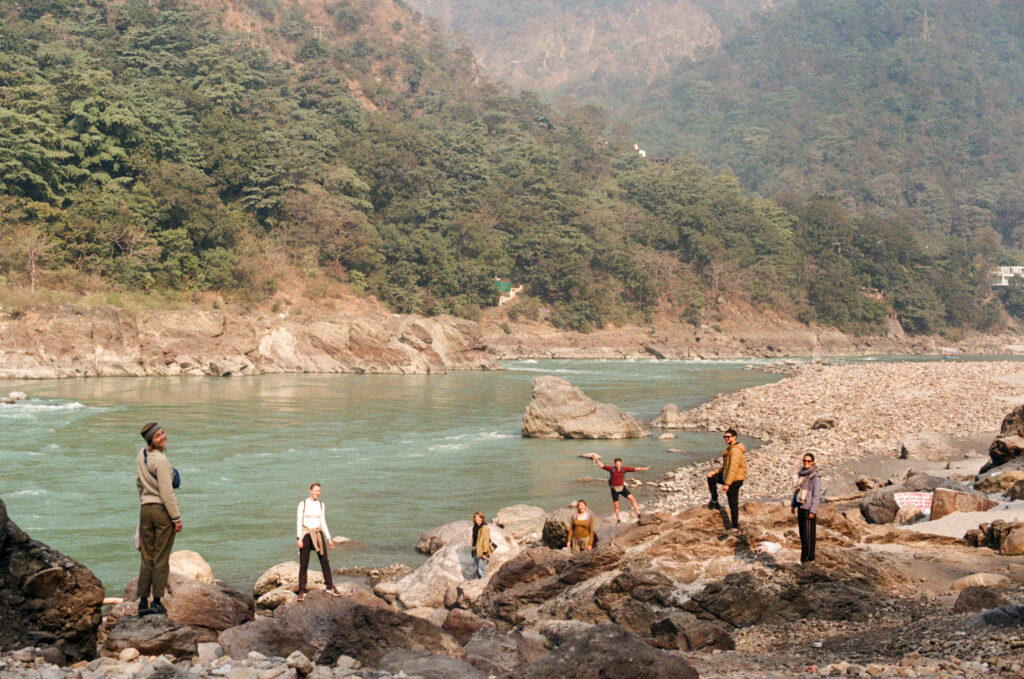
Although India is known to be one of the most overwhelming travel destinations, especially for first timers, I had spent the month of January tucked away in the quiet, rural side of Rishikesh, Uttarakhand in the north of India, and my final few days in Varkala, Kerala.
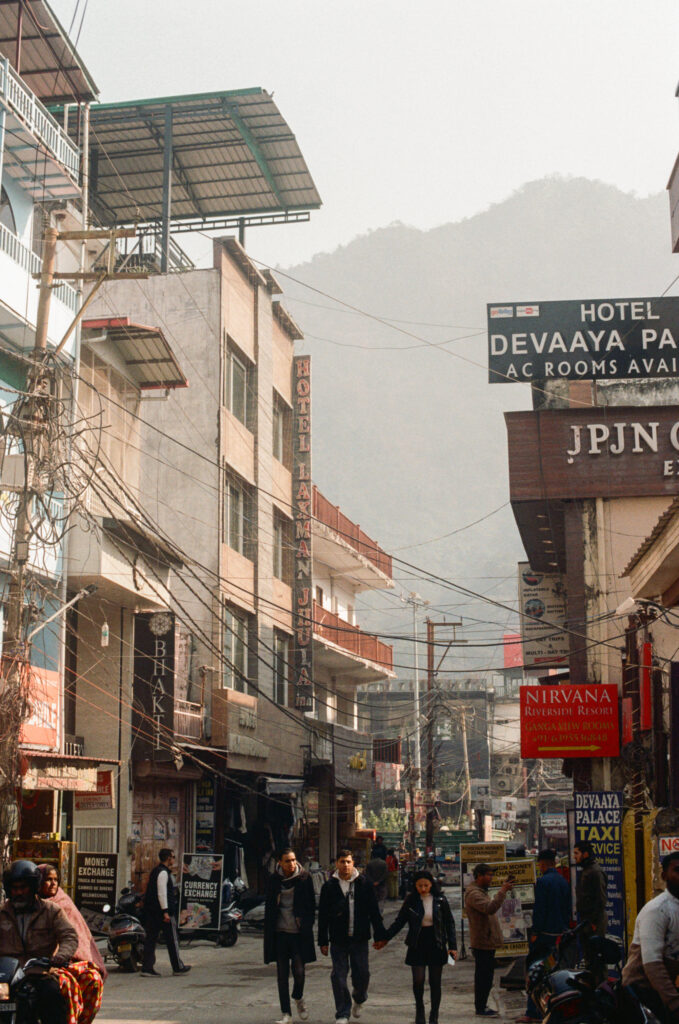
With the only sounds in the morning being the song of birds, I can say that my time in India was different than the expectations people have of the country. Of course, enter into any busier part of town, and you will be met with bustling streets, constant honking of horns, having to maneuver your way around tuktuks, people, dogs, cows, and monkeys – all on the same road.
With India being composed of 28 states, and 8 union territories, and 22 official languages, every person will have a vastly different impression of this place. There is so much to see, to explore, and I was gifted the chance to explore only one small fraction of it.
As someone who has been practicing the physical practice of yoga for years, there was some point along the way in which I knew I wanted to learn more, on a deeper level.
At one point throughout the years, the thought of India came into my mind. The birthplace of yoga, where this practice began. If I was going to do this, I wanted to do it where it felt right, and what better place to go than to the source?
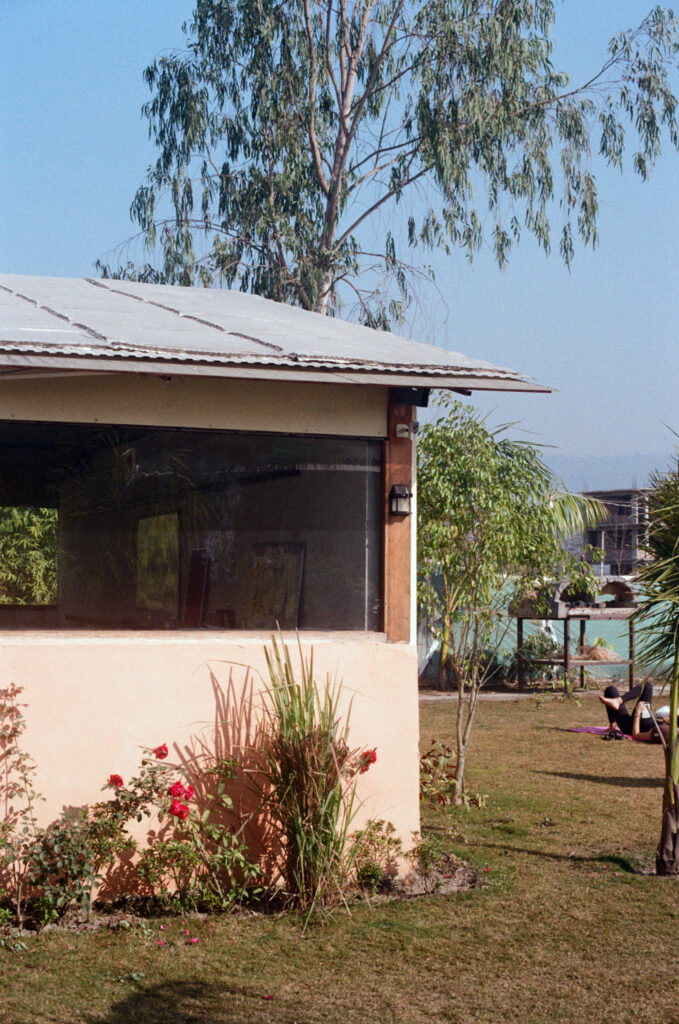
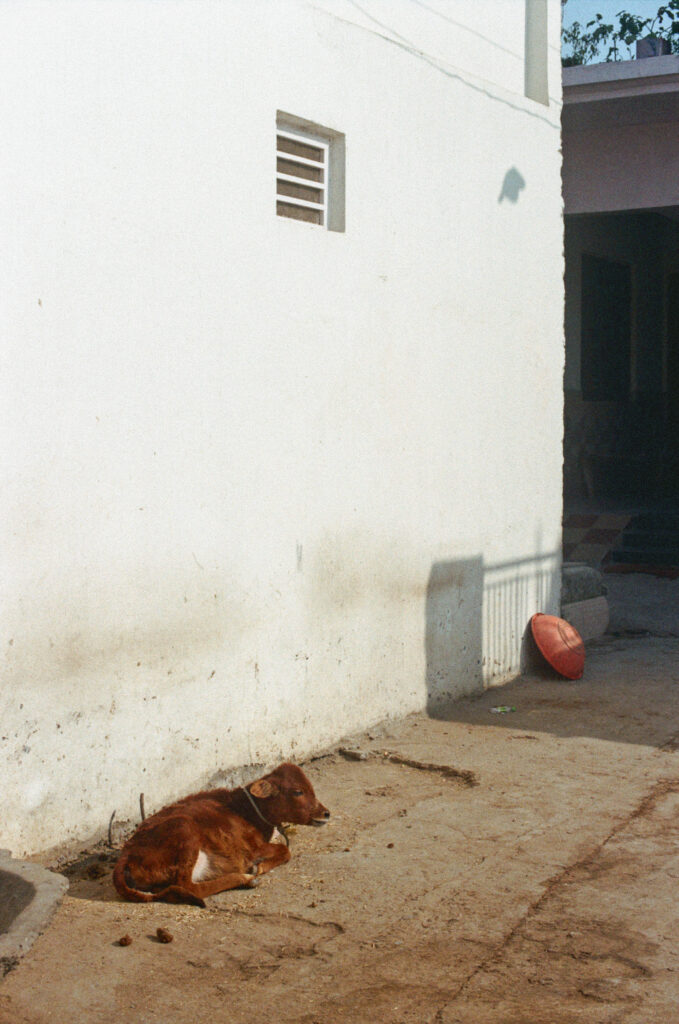
“Yoga is not an ancient myth buried in oblivion. It is the most valuable inheritance of the present. It is the essential need of today and culture of tomorrow” — Swami Stayananda Saraswati
II. Yogic Philosophy
There are insights that yogic practices have dated back to nearly 5000 years ago as documented in the original Vedas, ancient Sanskrit scriptures of Hinduism originating between 1500 and 500 BCE. These vedas are collections of holy texts that include old hymns, mantras, prayers to deities, ceremonies, sacrifices. There are 4 vedas, one of them being the Rigveda, the oldest and original Veda. Passed down orally, through chants and mantras, written down only later.
So yoga… What really is it?
As written so well in the manual received from my yoga school,
“There is the notion that there is just one universal energy, and we are expressions of the universe much like a wave is an expression of the sea. However, because we have the ability to walk around on the surface as a sort of ‘skin encapsulated envelope,’ we started to fall into the illusion that we are separate from it all.”
The word “yoga,” can be translated to “union.” Union of the individual self, or atman, to the cosmic self, or param atman.
Yoga, in the western world, is mostly known as a physical practice. Sometimes, a connection of body, with mind. Perhaps the weekly decompression for some. Perhaps the daily sweaty workout of a heated yoga class. For some, it’s meditation. For others, it’s the way you move through life.
The truth? It’s all of these things, and none of them.
Through yoga, we can separate ourselves from our mind. Controlling our thoughts allows us to be free from our minds. Freedom from our own minds can lead us to peace.
The connection of infinite to finite. Individual to universal. Physical to spiritual.
It’s how we act in the world. It’s a skill developed over years. Doing your office work, the weekly cleaning, the tasks of mundanity, with love, is what makes a yogi. Being able to maintain a level and peaceful mind, in states of imbalance and unrest, is yoga.
The truest yogis are babies. The unfiltered, and raw presence of existence. The awe of the world around them. The joy in small pleasures, sharing the same basic necessities of animals; to eat, drink, and be sheltered.
Ask a Tibetan yogi, and they will define a yogi as someone who has an understanding of the nature of the universe through completion of extensive retreats in nature, alone. One who enters into the dharma, the cosmic order, and one who does the practice of the mind, finding themselves always at ease, always at peace.
To my philosophy teacher, Deepak, he consistently referred to one of Pantajali’s yoga sutras when defining “yoga”:
yoga chitta vriti nirodha
Chitta meaning mind, Vriti meaning thoughts, and Nirodha meaning separation.
Meaning, if you are able to still the activity of the mind, you are in yoga.
Deepak further elaborated on this concept:
We have 4 trains of thought in our chitta, our minds:
- Man (mind): imaginations or commitments.
- Chitta (memory): past experiences. To which Deepak added, “Let them pass. They are past for a reason.”
- Ego (idea of the individual self): labels we attach to ourselves. For example: doctor, police, teacher, woman, husband, mother, etc.
- Budhhi (intellectual thought): understanding of the real goal of life.
According to Deepak, this goal is joy.
This same teacher told us a familiar tale of contentment that stuck with me.
Deep in a forest, secluded from society, a monk sat in effortless meditation, possessing virtually nothing but his robe and the mattress he lay on. A wealthy merchant, passing through on a business journey, stopped and looked at the monk with pity.
“Why do you sit here in the dirt?” the merchant asked. “Why don’t you go to the city and find work?”
The monk opened his eyes, a soft smile resting on his face. “To what end, my friend?”
“To earn a wage!” the merchant replied. “With money, you could buy sturdy shoes for your feet and a fine house with a soft bed. You could build a future where you don’t have to worry about a thing.”
“And then what?” the monk asked gently.
“Well,” the merchant laughed, “then you could finally retire, come to a peaceful place like this forest, sit down, and be happy!”
The monk gestured to the earth beneath him, closing his eyes in the warmth of the sun rays shining on his skin. “I have already arrived,” he said. “Why should I take the long way around to reach the seat I am already sitting in?”
Our natural state is harmony and joy. Whatever brings us back to these simple things, is yoga.
A yogi is self defined, and words are just letters. The point is not to fall under a label, or fit an expected role, but to simply find that peace exists within, and that everything we may “need,” can be found internally rather than externally. Much easier said than done, but hey, that’s the journey.
Ashtanga of Pantanjali
The 8 Limbs of Pantanjali Yoga
Yama: social ethics and peace with the world
- Ahimsa: non-violence
- Satya: truthfulness
- To others, and yourself.
- Astey: non-stealing
- Material things, personality traits, and even ideas.
- Aparigraha: non-possessiveness
- Lessening the accumulation of things.
- Brahamcharya: non-lust
- Controlling sensual pleasures.
Niyama: personal behavior and peace with self
- Soch: purifying the self
- Externally and internally. Right food, right habits, right cleanliness — making time for the self .
- Santosh: contentment
- Enjoying the journey, practicing humility and being content with what you have and who you are.
- Tapas: austerity
- Self discipline, accepting our circumstances, non comparison, committing to yourself.
- Swadhyaya: self study
- Observing self — pattern recognition, and improving
- Ishwarapranidhana: surrender to divinity
- Devotion to a faith, beyond any name.
Asana: physical postures and stability
- What many of us think of when we hear “yoga”
- The goal of these postures is to allow our healthy bodies to sit comfortably in meditation for longer periods of time.
Pranayama: vital energy and life force
- Prana meaning “life force,” and Ayama meaning expansion, or regulation.
- Can be found through breath. Deeper breaths heighten our vital energy.
Pratyahara: withdrawal of senses
- Turning our attention inwards
Dharana: concentration
- Dharana is something I used to mistake for meditation. Dharana can look like anything.
- Your direct focus on breath, a flame, any object, your third eye. Concentration on something as a tool to delve further into stillness. When concentration, or dharna, remains uninterrupted, only then we transcend to dhyana, or meditation.
Dhyana: meditation
- Tatra pratyaya ekatnata dhyanam [sutra 3.2]
- Repeated continuation of one point of focus is called absorption in meditation.
Samdahi: liberation and bliss
- “Becoming dead”
- Freeing of all disturbances of the mind
The Types of Yoga & The Three Gunas
Beyond the 8 steps of yoga, there are also many different types of yoga. Millions to be exact. Karma yoga, bhakti yoga, gyan yoga, hatha yoga, nidra yoga, kriya yoga, hot yoga, cold yoga, goat yoga, puppy yoga, the list goes on…
Yoga is the union of the individual and universal consciousness, with a goal to reach sattva: ultimate joy, happiness, and peace. Every individual on earth consists of three gunas, or energies, and the balance of them shifts in accordance to our living patterns.
According to the Bhagavad Gita, everything in existence is a unique mixture of these three threads. By understanding the interplay of the gunas, we learn to move away from the primal state of Rajas and the fog of Tamas, consciously aiming for the state of Sattva to achieve a clear mind.
Sattva represents the state of harmony, balance, and peace; living in the purest state of being.
Rajas is where many of us function in our daily lives. Rajas represents the fulfillment of actions and desires. When we want something, we do the actions it takes to attain that desire. If we want money, we work. If we’re hungry, we eat. If we’re tired, we sleep.
Tamas nature represents laziness, darkness, and sleep. It’s the energy that opposes the sattvic nature.
Yoga is becoming geometrically correct; mimicking the geometry of the universe.
Sadhguru talks about how it is a practice of becoming geometrically congruent, so that we become not of an individual state, but a universal one.
He has stated that asana, the physical practice of yoga, is simply “to loosen up the body in such a way that your physical body and sensory body are not stuck to each other.”
For example, when someone loses a limb but still feels the sensation of that limb, known as phantom pain, the sensory body is still there.
Yoga is expanding this sensory body, to feel and experience everything and anything as a part of yourself.
Something that one of my teachers kept reiterating:
This time on Earth is our vacation. It’s holiday for our soul. We do not know when it will be over. The point is to enjoy it now.
It’s funny almost, the irony of the conversations had between us students with our spiritual teachers. We would ask and ask about certain inalienable things about life, the roots of suffering, the reasons we ourselves may suffer, the parts of our personalities that matter, the concept of self versus personality versus true self… the moral of their stories always led to a more non-serious answer. We would be able to delve so deep into some energetical quest of figuring our point here on earth, whilst always coming back to the same answers. We are, 99.9% of the time, completely okay. Nothing is wrong. Things are actually quite well, and quite comfortable. But its through this peace that ultimately our human brains create drama. Only because we are so much at peace, that our minds are looking for something to solve.
Not so long ago, it was with these same human brains that we were fighting off predators, severe weather, when simple back when survival was our biggest concern. No wonder why our brains are constantly seeking issues. Its in our nature, and its our brains trying to keep us alive, and safe. But its about time we begin to notice that we are safe, indeed. At least much safer than we were as cave people.
With a problem, we have a mission of solving. A purpose, perhaps?
We people make noise in the form of language, and we make up the meaning. Yoga is realizing this:
“The same mind who created the tiger is the same mind who feels the fear.”
III. Cultural Findings & Observations
Things in India I noticed whilst travelling…
- The ease that comes with doing something for yourself.
The way things seem naturally easier when you do something for your soul. Situations consist of the right place and right time. I noticed the amount of ease and flow, that reiterated feelings of doing things that are truly meant to be. From the smoothness of my travels, being randomly upgraded, and acts of kindness from strangers, I took note of these signs.
- There is no good, or bad. Nor is there right or wrong.
- You are completely in charge, and responsible for your own feelings.
We can not give things, or people, outside of ourselves, the power to control our inner self. Giving someone else the power to change your inner state, causing either happiness or unhappiness, will eventually lead to a loss of self, a need to come back to that center.
- India is seemingly male dominated, as far as I noticed.
All my teachers were men, and there seemed to me more men than women at first glance in the streets. This being said, I never felt in danger, nor targeted as a woman. The people in general were so very kind.
- The importance of sitting, specifically on the ground.
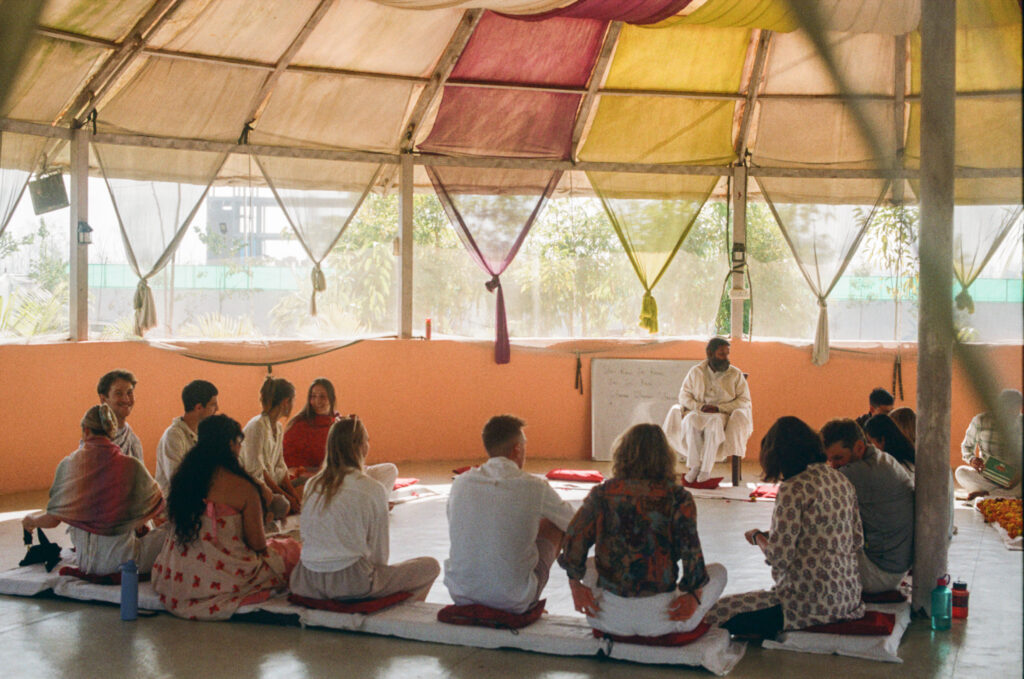
What came to my surprise was learning that the most advanced postures in yoga are the seated ones. Throughout the entire retreat, we sat without chairs. At first, I found myself struggling, and constantly adjusting myself trying to find comfort being seated on the floor. Within the first week we did a seated meditation that lasted 45 minutes, with an emphasis on stillness. Even when sitting on a bolster, I found myself on the verge of tears when faced with my discomfort. Over the three weeks, I noticed sukhasana, easy seat posture, becoming more and more comfortable. Isn’t it ironic how this seemingly easy posture tends to be the one of most discomfort? Is it because we hold it the longest? In meditation, we sit. In class, we sit. In prayer, we sit. At meals, we sit. A relearning of not relying on the comforts of an external object, such as a chair, to find comfort. Instead, finding it within my own body.
- Days of silence, and slowness.
There were times where we practiced days of silence. In this practice, becoming fully aware of our own energy. We were told to not make eye contact with each other, to eat, learn, and be in silence, and to pay attention to the moments you want to say something. When succumbing to silence, especially when surrounded by a group that has become good friends, you begin to notice the importance of our words, and the way you learn to choose them.
With this silence, we were also instructed to move as slow as possible. To take our time when standing up from our seat, to look at every point between point A and B, to notice where, and why, we are moving so fast; to become fully engrossed in every single movement, thought, and feeling that we had.
Learning to watch your own body as you complete a simple task, like opening a door. Watching your legs as they walk and transport you; your hands as you wash them, your mind when it has no one to share to. These days were pivotal to my time at the ashram. The slowness was an awakening practice that I still incorporate in my daily life. Notice where you rush, perhaps unnecessarily. Perhaps when walking from place to place, when cooking, when driving, when eating, when getting ready in the mornings. Pay attention to you, and make the conscious choice to slow down. What’s the rush?
- Shatkarma
Cleansing techniques. One being breath, one being neti, and another being physical cleansing. We started every morning with a neti pot before our morning breathwork class. This ritual has become routine for me, and is best in the mornings. Cleansing the sinuses with saline, has a plethora of benefits; relieving congestion, alleviating allergens, improving breathing, hydrating the nasal passages, and even improving ocular vision. Dedicating a small part of your morning for yourself, and your own personal practice. How radical is that?
- Tea time.
In India, tea is a huge part of culture, due to British import and industrialization in the 1800s. What started as a luxury export grew into an integral part of the daily routine for many. Without my typical coffee, tea became the new ritual. Usually three times a day, with meals and before them, the tea time we had was always an excuse to be present with yourself, with the others, and to create a quiet moment in the day. Again, the emphasis on being, and nothing more.
- The food
For vegetarians, India is heaven. With majority of the country either vegetarian or with limited meat consumption, the vegetarian options are bountiful and delicious. I came home with an entirely new palette, and enjoyed some of the most delicious meals, whilst actually feeling good after I ate. At the ashram, I learned a ton about the importance of food. In ayurveda, and other eastern traditions, food is medicine. During the course, there was a huge emphasis on this topic, and I found it changed the way I look at food, and consumption, in general. Seemingly monumental information that comes from simply returning to basics.
- The mirror of the universe
Imagine a ball hanging from a string. Push the ball away from you – it will swing towards you. Pull the ball towards you – it will swing away from you. Basic physics expose the true nature of the universe.
When we chase something that we want, or obsess over it, and exude all our focus on it, it will naturally start to avoid you, repelling this forceful energy.
If we try to avoid something, chances are, that it will likely keep following you, until you face it.

IV. Holistic Living: Ayurveda
The practice of Ayurveda is as fascinating as it is ancient. Much like Yoga, Ayurvedic practices are deeply rooted in history; while some literature dates to the 2nd century BCE, the core knowledge stretches back over 5,000 years.
Literally translated, Ayurveda means “life knowledge” derived from the Sanskrit words Ayur (Life) and Veda (Science or Knowledge).
THE FIVE ELEMENTS
The central premise of Ayurveda is our attunement with the elements of our world. As they exist on the physical planet, they also exist within our bodies. We all consist of these five elements in different ratios:
Ether (Space): Represented by our breath and the spaces within the body, and the space between all things. Cavities, spaces in our bodies that hold organs.
Air: The movement of breath and nerve impulses. Oxygen, gas, movement.
Fire: The heat used to digest food and transform energy. Acid, metabolism, temperature regulation.
Water: Which cleanses our blood, lubricates our organs, and balances our pH levels. Blood, plasma, lymph fluid, saliva, synovial fluid.
Earth: Our natural state of stillness, stability, and groundedness. Muscles, bones, and fat.
According to Ayurveda, disease comes from an imbalance of these elements, and the primary way we restore balance is through our food and lifestyle habits.
THE DOSHAS
These elements combine to form our Doshas, or life forces. In Ayurveda, the five elements manifest as three primary energies:
Vata (Air & Ether): The energy of movement and creativity.
Pitta (Fire & Water): The energy of digestion and metabolism.
Kapha (Earth & Water): The energy of structure and lubrication.
The word Dosha translates to “that which can go out of balance.”
While every being contains all three, the unique dominance of these elements is what creates our Prakriti: our inherent emotional, mental, and physical constitution. Your specific Prakriti determines your habitual eating patterns, personality traits, and even your physical appearance.
What I learned during my time in India was heavily focused on what we are ingesting, whether that be food, media, people, energy in all forms. Considering how much food is an important part of our lives as people, it would make sense how influential it is on our inner well being.
The saying remains true: You are what you eat.
The source of our food, the quality, the quantity, the intentions behind it; it all matters. Are you being intentional with your meals, or are you just eating to eat? All food can be placed into a catergory that corresponds with the doshas.
According to ayurveda, there is no right or wrong diet. It simply is about eating according to your doshas.
For example, foods that are spicy, or high acidity, increase our pitta, meaning our digestive fire is increased, which leads to an increase in temperature, and even energy. Very high pitta levels present themselves with redness, irritation, fever, heart burn, acne, etc. Emotionally, this can present itself as competitiveness, yearning for city life, and being on the go.
Being high in vata means that the air element is predominantly present. This usually presents itself in erratic, quick thoughts, dryness, anxiety, and instability. These symptoms can also present themself in the positive light, as lightness, free form, creative ideas, flowing, etc.
While dairy based and heavier carb foods are associated with kapha. Eating these foods can physically, and mentally slow us down, which can actually be useful for those who are experiencing an imbalance in pitta or vata doshas, if were overthinking, or anxious. Hence why many “comfort” foods we are familiar with literally have that comforting effect.
We are a balance of these three, and they all correspond with one another. Eating more of one type will decrease, or increase, another dosha. Our doshas can change throughout the day throughout our meals, as well as throughout the course of our lives.
Beyond diet, we find balance through breath, meditation, and fasting. These were themes practiced throughout the three weeks at the ashram. The importance of giving your body a rest, a chance for your organs to take a rest, and to again, find peace within ourselves rather than seeking external factors. The common theme here is absence.
When our physical bodies have time to rest, from thought, from digesting, and from movement, our minds finally have the space to be clear. In this stillness, our connection to our own source is heightened, allowing the body to return to its natural state of harmony.
Ayurveda is a fascinating and lengthy subject, and to even dip a toe in it is eye opening in many ways. You can find your dosha online through online quizzes, and if this interests you like it did me, a book I was recommended is “Ayurveda and the Mind,” by Dr. David Fowley.
VI. Attar: Perfume of the Earth
I discovered attar for the first time unknowingly. Every now and then, during my time at the ashram, I would get whiffs of the most lovely, earthy scent. After a couple days, I tracked down who this lovely scent followed. Her name was Caroline, from France, one of the older ladies in the cohort. I finally asked her, what scent are you wearing? She explained that it is sandalwood attar, purchased from the small handmade goods shop down the road from us.
Elated, I had a mission the next day to get my hands on this attar myself. In the midst of learning about non-possessiveness and non-attachment, I knew I still had to find out more about what this lovely scent was.
The next day, during the 2 hour break we had between lunch and anatomy class, a friend and I walked down the road, leaving the ashram for the first time since I arrived.
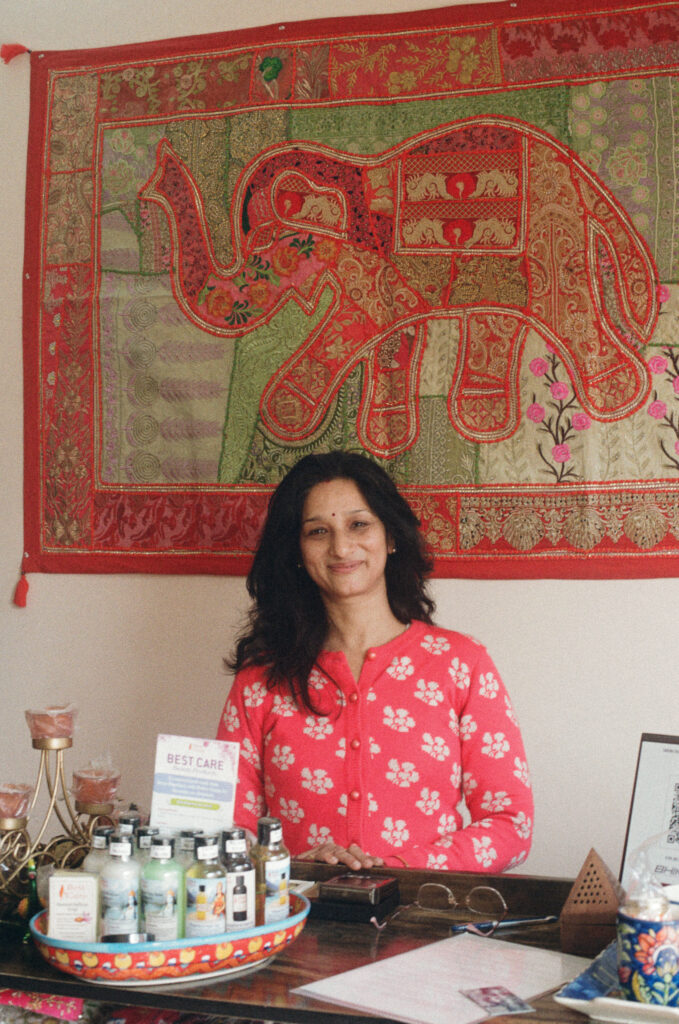
We met the owner of this shop, Jyoti. I told her what I was looking for, and she knew exactly who and what I was referring to. With a smile she said, “Caroline perhaps?” Yes Jyoti! The lovely smelling Caroline.
Jyoti let us smell all 10 of her attar scents. Although I loved many, Sandalwood was still my favorite. They were presented as small little roller balls, as small perfume oils are. However, I learned that attar is its own thing, separate from the perfume world. With its production being ancient, and a labor of love, I knew I had stumbled upon an eye opening means of perfumery, unique to this culture.
I even brought some of India back home with me, to share with all of you.
You can explore more on attar, here.
V. Takeaways
The sliver of India I experienced has left an infinite mark on my soul. The lessons gathered there have transcended mere knowledge as they are now woven into my daily routine. Like every place that leaves its footprint on us, India reminded me that we are each a collection of every person we’ve met, every land we’ve touched. We each carry a unique piece of the world within us, waiting to be shared.
Yet, after all of this, the most profound realization is that I still know nothing.
I stand once again at the beginning of a blank page, humbled by the vastness of a universe that refuses to be solved. But perhaps the answers aren’t the point.
I’ve come to understand that our time here on Earth is a gift, meant to be enjoyed. How lucky are we to witness the Earth’s beauty and live in harmony with its elements. Taking care of our collective home begins with the self, as it is the grounding truth that we are one. When we treat others with kindness, we are simply healing ourselves.
Being human is complicated and our time is fleeting, so I choose to enjoy the journey. I’ve learned there is no destination, only the walk.
Thanks for reading.
If you’ve made it this far, thank you for your time, and your attention.
To all my fellow yogis, if you are interested in this journey, or have any questions, our inbox is always open. Email us anytime, and I will gladly answer and discuss anything mentioned.
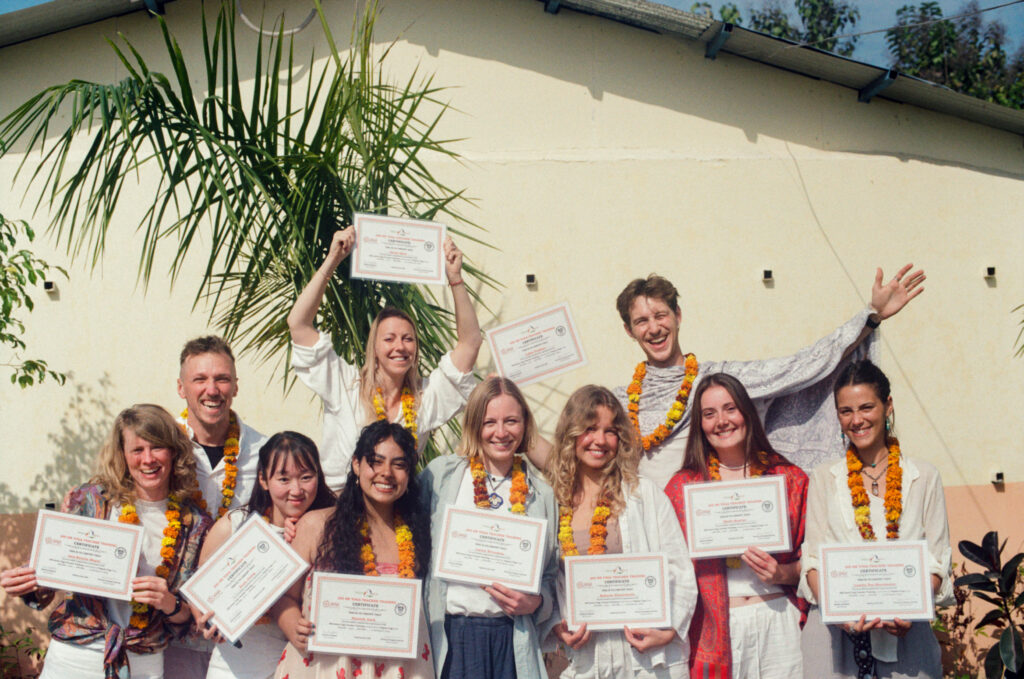
To those who shared this experience with me, I send you so much love. It was so beautiful to watch every one of you blossom from a student into our very own teachers. To the many “aums” chanted together, reminding us of all of our connectedness. And a reminder that all of our greatest teacher exists underneath.
To anyone interested in attar, make sure to read on in our Attar piece, where we dive into fine print of this perfume from the Earth. Limited quantity to share.
Thank you to India for all the lessons, the hospitality, and the warmth received.
Remember that where you are now, is exactly where you need to be. The only thing that is ever real, is this very moment.
Namaste,
Roberta
AUM
SHANTI SHANTI SHANTI